
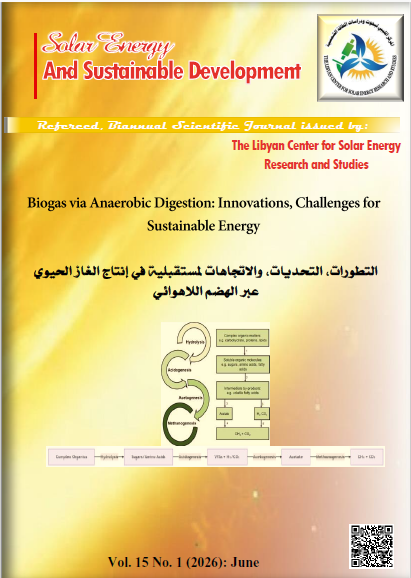
Biogas via Anaerobic Digestion: Innovations, Challenges for Sustainable Energy
DOI:
https://doi.org/10.51646/jsesd.v15i1.623Keywords:
Biogas generation, anaerobic digestion, renewable energy, feedstock enhancement, circular economy, microbial communitiesAlgeria.Abstract
Anaerobic digestion (AD) is a vital technology for sustainable waste management and renewable energy production, converting organic waste into methane-rich biogas and nutrient-rich digestate. Despite its potential, AD faces barriers to large-scale adoption, including feedstock variability, process instability, and high operational costs. This review critically evaluates recent advancements in AD technology, focusing on innovations that enhance efficiency and scalability, while identifying key challenges and policy gaps—particularly in developing economies. A systematic literature review (2014–2024) was conducted using PRISMA guidelines, analyzing 210 peer-reviewed studies from Scopus, Web of Science, and ScienceDirect. Quantitative and thematic analyses were performed using NVivo and VOSviewer. Recent advancements demonstrate that pretreatment strategies (e.g., enzymatic hydrolysis, thermal methods) improve biogas yields by 20–360%, while microbial bioaugmentation enhances process stability. Hybrid systems, such as temperature-phased AD, achieve 29% higher methane yields than conventional reactors, though economic viability remains dependent on policy support (e.g., the EU’s RED II incentives) and AI-driven optimization. Challenges persist in low-income regions due to high capital costs and infrastructural limitations. Future Directions: Integrating circular economy principles, hybrid renewable energy systems (e.g., AD-solar), and decentralized models can address scalability challenges. This review uniquely bridges lab-scale innovations with actionable policy insights, emphasizing AD’s role in global energy transitions.
Downloads
Metrics
References
Stolze, Y., Zakrzewski, M., Maus, I., Eikmeyer, F., Jaenicke, S., Rottmann, N., Siebner, C., Pühler, A., & Schlüter, A. (2015). Comparative metagenomics of biogas-producing microbial communities from production-scale biogas plants operating under wet or dry fermentation conditions. Biotechnology for Biofuels, 8(1), 14. https://doi.org/10.1186/s13068-014-0193-8
Ngabala, E., & Emmanuel, M. (2024). Biogas production and utilization: Sustainable energy pathways. Renewable Energy Reviews, 42(3), 112-125.
Calbry-Muzyka, A., Madi, H., Rüsch-Pfund, F., Gandiglio, M., & Biollaz, S. (2022). Biogas composition from agricultural sources and the organic fraction of municipal solid waste. Renewable Energy, 181, 1000– 1007. https://doi.org/10.1016/j.renene.2021.09.100
Jameel, K., Haider, S., & Ali, M. (2024). Advances in anaerobic digestion: A pathway to sustainable energy. Journal of Biochemical Engineering, 29(2), 134–149.
Baena-Moreno, F. M., Rodríguez-Galán, M., Vega, F., Vilches, L. F., & Navarrete, B. (2019). Review: Recent advances in biogas purifying technologies. International Journal of Green Energy, 16(5), 401–412. https://doi.org/10.1080/15435075.2019.1572610
Nguyen, L., Kumar, J., Vu, M. T., Mohammed, J., Pathak, N., Commault, A. S., Sutherland, D., Zdarta, J., Tyagi, V., & Nghiem, L. (2020). Biomethane production from anaerobic co-digestion at wastewater treatment plants: A critical review on development and innovations in biogas upgrading techniques. Science of the Total Environment, 742, 142753. https://doi.org/10.1016/j.scitotenv.2020.142753
Angelidaki, I., Treu, L., Tsapekos, P., Luo, G., Campanaro, S., Wenzel, H., & Kougias, P. G. (2018). Biogas upgrading and utilization: Current status and perspectives. Biotechnology Advances, 36(2), 452-466. https://doi.org/10.1016/j.biotechadv.2018.01.011
Adnan, A. I., Ong, M., Nomanbhay, S., Chew, K., & Show, P. L. (2019). Technologies for biogas upgrading to biomethane: A review. Bioengineering, 6(4), 92. https://doi.org/10.3390/bioengineering6040092
Uddin, M., & Wright, C. (2022). Current advancements in anaerobic digestion: Challenges and opportunities. Renewable Energy Systems, 34(5), 421–436. https://doi.org/10.1016/j.renene.2021.11.123
Vasco-Correa, J., Li, Y., & Sharara, M. (2018). Anaerobic digestion in the context of biorefineries: A review. Bioresource Technology, 247, 1005–1016. https://doi.org/10.1016/j.biortech.2017.09.068
Khanal, S. K., Surampalli, R. Y., Zhang, T., & Lamsal, B. (2021). Emerging technologies in anaerobic digestion and biogas production. Environmental Science & Technology Reviews, 13(4), 510–526. https://doi.org/10.1021/acs.est.8b04172
Venkiteshwaran, K., Bocher, B., Maki, J., & Zitomer, D. (2015). Relating anaerobic digester function to microbial community structure in thermophilic and mesophilic digesters. Bioresource Technology, 197, 50– 58. https://doi.org/10.1016/j.biortech.2015.09.045
Yang, H., Deng, R., Jin, J., Wu, Y., Jiang, X., & Shi, J. (2021). Hydrolytic performances of different organic compounds in different lignocellulosic biomass during anaerobic digestion. Environmental Engineering Research, 27(4), 210013. https://doi.org/10.4491/eer.2021.013
Cirne, D. G. (2006). Evaluation of biological strategies to enhance hydrolysis during anaerobic digestion of complex waste [Doctoral dissertation, Lund University]. Lund University Publications. https://lup.lub.lu.se/record/546144
Dahiya, S., Lingam, Y., & Venkata Mohan, S. (2023). Understanding acidogenesis towards green hydrogen and volatile fatty acid production: Critical analysis and circular economy perspective. Chemical Engineering Journal, 451, 141550. https://doi.org/10.1016/j.cej.2023.141550
Magdalena, J., Ballesteros, M., & González‐Fernández, C. (2020). Acidogenesis and chain elongation for bioproduct development. In A. Pandey, J.-S. Chang, C. R. Soccol, D.-J. Lee, & Y. Chisti (Eds.), Current Developments in Biotechnology and Bioengineering: Emerging Organic Waste Valorization Techniques (pp. 319–344). Elsevier. https://doi.org/10.1016/b978-0-12-816204-0.00017-5
Müller V. (2019). New Horizons in Acetogenic Conversion of One-Carbon Substrates and Biological Hydrogen Storage. Trends in biotechnology, 37(12), 1344–1354. https://doi.org/10.1016/j.tibtech.2019.05.008
Ragsdale, S. W. (2008). Enzymology of the Wood–Ljungdahl pathway of acetogenesis. Annals of the New York Academy of Sciences, 1125(1), 129–136. https://doi.org/10.1196/annals.1419.015
Katsyv, A., & Müller, V. (2020). Overcoming energetic barriers in acetogenic C1 conversion. Frontiers in Bioengineering and Biotechnology, 8, 621166. https://doi.org/10.3389/fbioe.2020.621166
Lyu, Z., Shao, N., Akinyemi, T., & Whitman, W. B. (2018). Methanogenesis. Current biology: CB, 28(13), R727–R732. https://doi.org/10.1016/j.cub.2018.05.021
Stams, A. J. M., & Plugge, C. M. (2010). The microbiology of methanogenesis. In Methane and Climate Change (1st ed., pp. 13). Routledge. https://doi.org/10.4324/9781849775090
Mand, T. D., & Metcalf, W. W. (2019). Energy Conservation and Hydrogenase Function in Methanogenic Archaea, in Particular the Genus Methanosarcina. Microbiology and molecular biology reviews: MMBR, 83(4), e00020-19. https://doi.org/10.1128/MMBR.00020-19
Wolin, M. J., & Miller, T. L. (1987). Bioconversion of organic carbon to CH4 and CO2. Geomicrobiology Journal, 5(3–4), 239–259. https://doi.org/10.1080/01490458709385972
Weimer, P. J. (2019). Redox reactions and anaerobic microbial metabolism in natural environments. Microbiology and Molecular Biology Reviews, 83(3), e00020-19. https://doi.org/10.1128/MMBR.00020-19
Smith, A. M., & Patterson, D. (2009). Sustainable resource management and energy. In G. Boyle, B. Everett, & J. Ramage (Eds.), Renewable Energy: Power for a Sustainable Future (pp. 105–123). Earthscan. https://doi.org/10.4324/9781849775090-5
Taconi, K. A., Venkiteshwaran, K., & Boopathy, R. (2008). Methanogenesis under acidic conditions in a semi-continuous reactor. Bioresource Technology, 99(7), 2791–2796. https://doi.org/10.1016/j.biortech.2007.06.008
Zhou, J., Zhang, R., He, Y., & Shen, D. (2016). Biogas production and microbial community shift through neutral pH control during the anaerobic digestion of pig manure. Bioresource Technology, 217, 44–50. https://doi.org/10.1016/j.biortech.2016.02.090
Kaiser, S., & Dague, R. R. (1994). The temperature-phased anaerobic biofilter process. Bioresource Technology, 47(2), 205–212. https://doi.org/10.1016/0960-8524(94)90180-5
Shi, C., Zhao, Y., Wang, X., & Ren, H. (2022). Evaluation of pH regulation in carbohydrate-type municipal waste anaerobic co-fermentation: Roles of pH at acidic, neutral, and alkaline conditions. Science of the Total Environment, 838(Pt 1), 155837. https://doi.org/10.1016/j.scitotenv.2022.155837
Latif, M. A., Mehta, C. M., & Batstone, D. J. (2017). Influence of low pH on continuous anaerobic digestion of waste activated sludge. Water Research, 113, 42–49. https://doi.org/10.1016/j.watres.2017.02.002
Lv, W., Zhang, W., & Angelidaki, I. (2010). Putting microbes to work in sequence: Recent advances in temperature-phased anaerobic digestion processes. Bioresource Technology, 101(12), 4056–4064. https://doi.org/10.1016/j.biortech.2010.07.100
Taconi, K. A., Zappi, M. E., French, W. T., & Brown, L. R. (2008). Methanogenesis under acidic pH conditions in a semi-continuous reactor system. Bioresource Technology, 99(17), 8075–8081. https://doi.org/10.1016/j.biortech.2008.03.068
Yadav, P., Kumar, R., & Singh, A. (2023). Balancing organic loading rates and retention time for efficient anaerobic digestion. Energy for Sustainable Development, 72, 34–48. https://doi.org/10.1016/j.esd.2023.02.001
Sarker, S., Roy, S., & Ahmed, S. (2019). Effects of temperature and organic loading rate on biogas production: A comprehensive review. Bioresource Technology Reports, 7, 100-115. https://doi.org/10.1016/j.bitec.2019.07.001
Tabatabaei, M., Rahim, R. A., & Hanif, M. A. (2018). Importance of pH in anaerobic digestion: A review of key parameters. Renewable Energy Technology Advances, 15(2), 45–67. https://doi.org/10.1016/j.reta.2018.03.009
Sayara, T., & Sánchez, A. (2019). A review on anaerobic digestion of lignocellulosic wastes: Pretreatments and operational conditions. Applied Sciences, 9(21), 4655. https://doi.org/10.3390/app9214655
Perendeci, N. (2021). Boosting biogas production and process stability by pretreatment. In Proceedings of the 3rd International Conference of Green Civil and Environmental Engineering (GCEE 2021). AIP Conference Proceedings, 2338(1), 040006. https://doi.org/10.1063/5.0072854
Morales Polo, C., et al. (2018). Reviewing the anaerobic digestion of food waste: From waste generation and anaerobic process to its perspectives. Applied Sciences, 8(10), 1804. https://doi.org/10.3390/app8101804
Nges, I. A., Escobar, F., & Björnsson, L. (2012). Benefits of supplementing an industrial waste anaerobic digester with energy crops for increased biogas production. Waste Management, 32(4), 652–659. https://doi.org/10.1016/j.wasman.2011.09.009
Annamalai, N., Elayaraja, S., Oleskowicz-Popiel, P., Zhu, D., & Rodkhum, C. (2023). Enhanced anaerobic digestion: Recent advancements and future prospects. In Valorization of Biomass to Bioproducts: Organic Acids and Biofuels (pp. 241–255). Academic Press. https://doi.org/10.1016/B978-0-12-822888-3.00002-5
Callander, I., & Barford, J. (1983). Recent advances in anaerobic digestion technology. Process Biochemistry, 18(5), 24-30. https://doi.org/10.1016/0032-9592(83)80005-4
Khanal, S. K., Lü, F., Li, Y., Liu, H., & Oechsner, H. (2021). Anaerobic digestion beyond biogas. Bioresource Technology, 337, 125378. https://doi.org/10.1016/j.biortech.2021.125378
Willis, J., & Schafer, P. (2006). Advances in thermophilic anaerobic digestion. Water Environment Research, 78(8), 760-771. https://doi.org/10.2175/193864706783762869
Huang, X. (2024). The promotion of anaerobic digestion technology upgrades in waste stream treatment plants for the circular economy in the context of "Dual Carbon": Global status, development trend, and future challenges. Water, 16(24), 3718. https://doi.org/10.3390/w16243718
Nasir, I. M., Mohd Ghazi, T. I., & Omar, R. (2012). Anaerobic digestion technology in livestock manure treatment for biogas production: A review. Engineering in Life Sciences, 12(3), 258–269. https://doi.org/10.1002/elsc.201100150
[29] Kaparaju, P., Buendía, I., Ellegaard, L., & Angelidaki, I. (2009). Effects of mixing on methane production during thermophilic anaerobic digestion of manure: Lab-scale and pilot-scale studies. Bioresource Technology, 100(8), 2330–2336. https://doi.org/10.1016/j.biortech.2008.11.033
Sakar, S., Yetilmezsoy, K., & Kocak, E. (2009). Anaerobic digestion technology in poultry and livestock waste treatment--a literature review. Waste management & research: the journal of the International Solid Wastes and Public Cleansing Association, ISWA, 27(1), 3–18. https://doi.org/10.1177/0734242X07079060
Lissens, G., Thomsen, A. B., De Baere, L., Verstraete, W., & Ahring, B. K. (2004). Thermal wet oxidation improves anaerobic biodegradability of raw and digested biowaste. Environmental Science & Technology, 38(12), 3418-3424. https://doi.org/10.1021/es035092h
Fu, X., Achu, N. I., & Bjornsson, L. (2010, March 28–31). Comparison of reactor configurations for biogas production from energy crops [Conference paper]. Asia-Pacific Power and Energy Engineering Conference (APPEEC), Chengdu, China. IEEE. https://doi.org/10.1109/APPEEC.2010.5448770
Schmit, K., & Ellis, T. (2001). Comparison of temperature phased and other state-of-the-art processes for anaerobic digestion of municipal solid waste. In Proceedings of the 24th Annual International Conference on Solid Waste Technology and Management (pp. 1–12). Widener University. https://www.researchgate.net/publication/255604025
Lv, W., Schanbacher, F. L., & Yu, Z. (2010). Putting microbes to work in sequence: recent advances in temperature-phased anaerobic digestion processes. Bioresource technology, 101(24), 9409–9414. https://doi.org/10.1016/j.biortech.2010.07.100
Reusser, S., & Zelinka, G. (2004). Laboratory-scale comparison of anaerobic-digestion alternatives. Water Environment Research, 76(3), 268–276. https://doi.org/10.2175/106143004X141951
Kim, M., & Speece, R. E. (2002). Reactor configuration--Part I. Comparative process stability and efficiency of mesophilic anaerobic digestion. Environmental technology, 23(6), 631–642. https://doi.org/10.1080/09593330.2002.9619248
Nasir, I. M., Ghazi, T. I. M., & Omar, R. (2012). Anaerobic digestion technology in livestock manure treatment for biogas production: A review. Engineering in Life Sciences, 12(3), 258–269. https://doi.org/10.1002/elsc.201100150
Teater, C., Yue, Z., MacLellan, J., Liu, Y., & Liao, W. (2011). Assessing solid digestate from anaerobic digestion as feedstock for ethanol production. Bioresource Technology, 102(2), 1856–1861. https://doi.org/10.1016/j.biortech.2010.09.099
Karthikeyan, P. K., Radu, T., & Bandulasena, H. (2024). A comparative analysis of pre-treatment technologies for enhanced biogas production from anaerobic digestion of lignocellulosic waste. Industrial Crops and Products, 215, 118591. https://doi.org/10.1016/j.indcrop.2024
Kariyama, I. D., Zhai, X., & Wu, B. (2018). Influence of mixing on anaerobic digestion efficiency in stirred tank digesters: A review. Water Research, 143, 503–517. https://doi.org/10.1016/j.watres.2018.06.065
Lutze, R., Alvarado-Lassman, A., & Kerger, K. (2020). Comparison of CSTR and AnMBR for anaerobic digestion of WAS and lipid-rich flotation sludge from the dairy industry. Water Resources and Industry, 22, 100115. https://doi.org/10.1016/j.wri.2019.100122
Zhu, Y., Yu, D., Koornneef, E., & Parker, W. J. (2024). Pilot-scale evaluation of cascade anaerobic digestion of mixed municipal wastewater treatment sludges. Water Environment Research, 96(7), e11072. https://doi.org/10.1002/wer.11072
Zahan, Z., Othman, M. Z., & Muster, T. H. (2018). Anaerobic digestion/co-digestion kinetic potentials of different agro-industrial wastes: A comparative batch study for C/N optimisation. Waste management (New York, N.Y.), 71, 663–674. https://doi.org/10.1016/j.wasman.2017.08.014
Fagbohungbe, M. O., et al. (2017). The challenges of anaerobic digestion and the role of biochar in optimizing anaerobic digestion. Waste Management, 61, 22–32. https://doi.org/10.1016/j.wasman.2016.11.028
Huang, X. (2024). The promotion of anaerobic digestion technology upgrades in waste stream treatment plants for the circular economy in the context of “Dual Carbon.” Water, 16(24), 3718. https://doi.org/10.3390/w16243718
Uddin, M., & Wright, S. (2022). Anaerobic digestion fundamentals, challenges, and technological advances. Physical Sciences Reviews. https://doi.org/10.1515/psr-2021-0068
Rasapoor, M., et al. (2020). Recognizing the challenges of anaerobic digestion: Critical steps toward improving biogas generation. Renewable Energy. https://doi.org/10.1016/j.fuel.2019.116497
Fonoll Almansa, X., et al. (2023). Anaerobic digestion as a core technology in addressing the global sanitation crisis: Challenges and opportunities. Environmental Science and Technology. https://doi.org/10.1021/acs.est.3c05291
Sawatdeenarunat, C., et al. (2015). Anaerobic digestion of lignocellulosic biomass: Challenges and opportunities. Bioresource Technology, 178, 178–186. https://doi.org/10.1016/j.biortech.2014.09.103
Batstone, D. J. (2013). Modelling and control in anaerobic digestion: Achievements and challenges. Bioresource Technology, 247, 1061–1068.
Amha, Y. M., Anwar, M., Brower, A., & Jacobsen, C. S. (2018). Application of molecular tools to investigate inhibitors of anaerobic digestion processes. Bioresource Technology, 267, 573-582. https://doi.org/10.1016/j.biortech.2017.08.210
Rajagopal, R., Massé, D. I., & Singh, G. (2013). A critical review of the inhibition of the anaerobic digestion process by excess ammonia. Bioresource Technology, 143, 632-641. https://doi.org/10.1016/j.biortech.2013.06.030
Elsamadony, M., Tawfik, A., Suzuki, M., & Fujii, M. (2020). Advances towards understanding long-chain fatty acid-induced inhibition and overcoming strategies for the efficient anaerobic digestion process. Water Research, 183, 116087. https://doi.org/10.1016/j.watres.2020.116732
Yang, G., Zhang, G., Wang, Y., & Zhang, X. (2016). Transformations, inhibition, and inhibition control methods of sulfur in sludge anaerobic digestion: A review. Environmental Science and Chemistry, 22(10), 543-556. https://doi.org/10.2174/1385272820666160513152913
Chen, J., Ortiz, R., Steele, T. W. J., & Stuckey, D. C. (2014). Toxicants inhibiting anaerobic digestion: A review. Biotechnology Advances, 32(8), 1523-1534. https://doi.org/10.1016/j.biotechadv.2014.10.005
Astals, S., Batstone, D., & Jensen, P. (2015). Development and validation of a rapid test for anaerobic inhibition and toxicity. Water Research, 81, 208-215. https://doi.org/10.1016/j.watres.2015.05.063
Pérez-Elvira, S. I., Fdz-Polanco, M., & Fdz-Polanco, F. (2011). Enhancement of the conventional anaerobic digestion of sludge: comparison of four different strategies. Water science and technology: a journal of the International Association on Water Pollution Research, 64(2), 375–383. https://doi.org/10.2166/wst.2011.593
Sillero, L., Sganzerla, W. G., Carneiro, T. F., Solera, R., & Perez, M. (2023). Techno-economic analysis of single-stage and temperature-phase anaerobic co-digestion of sewage sludge, wine vinasse, and poultry manure. Journal of Environmental Management, 325(Pt A), 116419. https://doi.org/10.1016/j.jenvman.2022.116419
Yu, Q., Li, H., Deng, Z., Liao, X., Liu, S., & Liu, J. (2020). Comparative assessment of two full-scale food waste treatment plants with different anaerobic digestion processes. Journal of Cleaner Production, 258, 121625. https://doi.org/10.1016/j.jclepro.2020.121625
European Parliament and Council. (2018). Directive (EU) 2018/2001 on the promotion of the use of energy from renewable sources. Official Journal of the European Union. https://eurlex.europa.eu/eli/dir/2018/2001/oj
European Commission. (n.d.). Energy. https://energy.ec.europa.eu/index_en
SATAAT. (n.d.). Sustainable Alternative Towards Affordable Transportation. https://satat.co.in/satat/
United Nations Environment Programme (UNEP). (n.d.). UNEP - United Nations Environment Programme. https://www.unep.org/
Vasco-Correa, J., Khanal, S., Manandhar, A., & Shah, A. (2018). Anaerobic digestion for bioenergy production: Global status, environmental and techno-economic implications, and government policies. Bioresource Technology, 247, 1015–1026. https://doi.org/10.1016/j.biortech.2017.09.004
Tavera-Ruiz, C., Martí-Herrero, J., Mendieta, O., Jaimes-Estévez, J., Gauthier-Maradei, P., Azimov, U., Escalante, H., & Castro, L. (2023). Current understanding and perspectives on anaerobic digestion in developing countries: Colombian case study. Renewable and Sustainable Energy Reviews, 171, 113097. https://doi.org/10.1016/j.rser.2022.113097
Khalid, H., Zhang, H., Liu, C., Li, W., Abuzar, M. K., Amin, F. R., Liu, G.-Q., & Chen, C. (2020). PEST (political, environmental, social & technical) analysis of the development of the waste-to-energy anaerobic digestion industry in China as a representative for developing countries. Sustainable Energy & Fuels, 4(3), 1088-1102. https://doi.org/10.1039/c9se00692c
Ibarra-Esparza, F. E., González-López, M. E., Ibarra-Esparza, J., Lara-Topete, G. O., Senés-Guerrero, C., Cansdale, A., Forrester, S., Chong, J. P. J., & Gradilla-Hernández, M. S. (2023). Implementation of anaerobic digestion for valorizing the organic fraction of municipal solid waste in developing countries: Technical insights from a systematic review. Journal of Environmental Management, 347, 118993. https://doi.org/10.1016/j.jenvman.2023.118993
Kulkarni, I., Zang, J., Leandro, W. M., Parikh, P., Adler, I., da Fonseca-Zang, W. D., & Campos, L. (2021). Closed-loop biodigesters on small-scale farms in low- and middle-income countries: A review. Water, 13(19), 2744. https://doi.org/10.3390/w13192744
Sharara, M. A., Owusu-Twum, M. Y., Runge, T. M., & Larson, R. (2020). Planning methodology for anaerobic digestion systems on animal production facilities under uncertainty. Waste management (New York, N.Y.), 104, 262–269. https://doi.org/10.1016/j.wasman.2020.01.028
Smith, S. J., Satchwell, A. J., Kirchstetter, T. W., & Scown, C. D. (2021). The implications of facility design and enabling policies on the economics of dry anaerobic digestion. Waste management (New York, N.Y.), 128, 122–131. https://doi.org/10.1016/j.wasman.2021.04.048
Dolan, T., Cook, M. B., & Angus, A. J. (2011). Financial appraisal of wet mesophilic AD technology as a renewable energy and waste management technology. The Science of the total environment, 409(13), 2460– 2466. https://doi.org/10.1016/j.scitotenv.2011.03.011
Gadaleta, G., De Gisi, S., & Notarnicola, M. (2021). Feasibility analysis on the adoption of decentralized anaerobic co-digestion for the treatment of municipal organic waste with energy recovery in urban districtsof metropolitan areas. International Journal of Environmental Research and Public Health, 18(4), 1820. https://doi.org/10.3390/ijerph18041820
Fan, Y. V., Klemeš, J. J., Lee, C. T., & Perry, S. (2018). Anaerobic digestion of municipal solid waste: Energy and carbon emission footprint. Journal of Environmental Management, 223, 888–897. https://doi.org/10.1016/j.jenvman.2018.07.005
Downloads
Published
How to Cite
Issue
Section
License
Copyright (c) 2026 Iman Bengharbia, Yousef Ahmed Alnass

This work is licensed under a Creative Commons Attribution-NonCommercial 4.0 International License.